







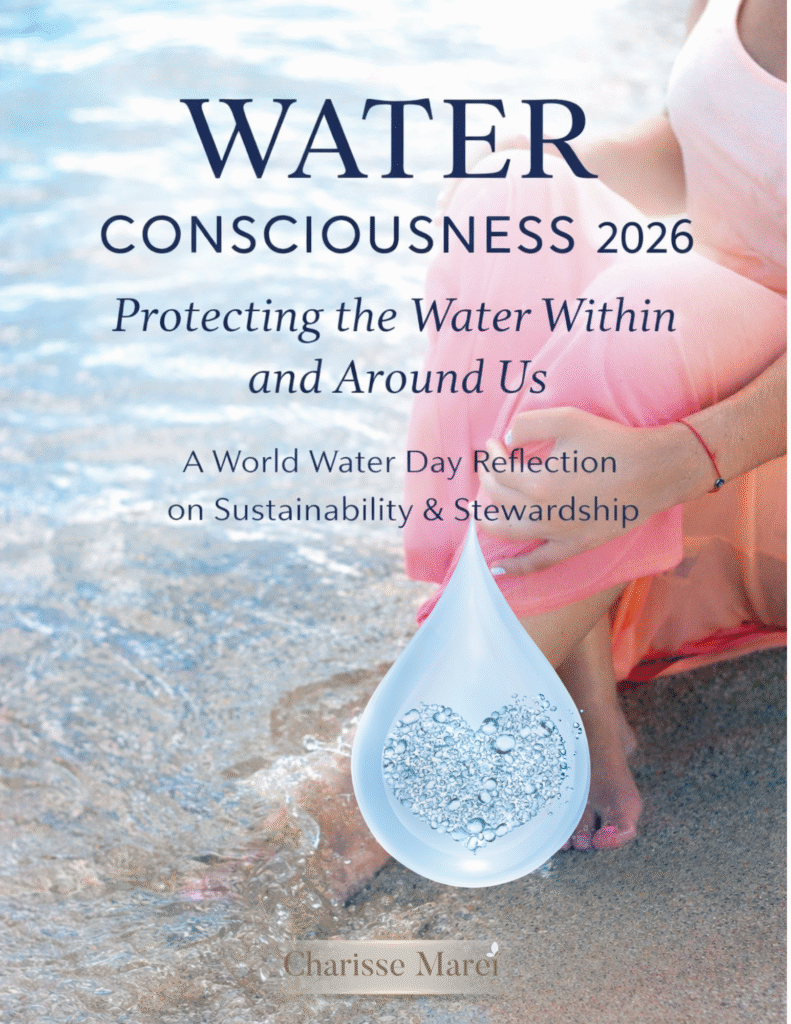
Protecting the Water Within and Around Us
By Charisse Marei
World Water Day – March 22, 2026
Did you know the Earth holds roughly 326,000,000,000,000,000,000 gallons of water? That’s 326 million trillion gallons!
And yet, almost all of it is unusable for drinking.
- 96.5% is saline (saltwater – undrinkable).
- Most of the remaining freshwater, about 2%, is locked away in glaciers and ice caps.
- Only a very small fraction, less than 1%, is fresh, accessible, and drinkable.
- Learn more.
Water awareness is no longer a trend.
It is a global necessity.
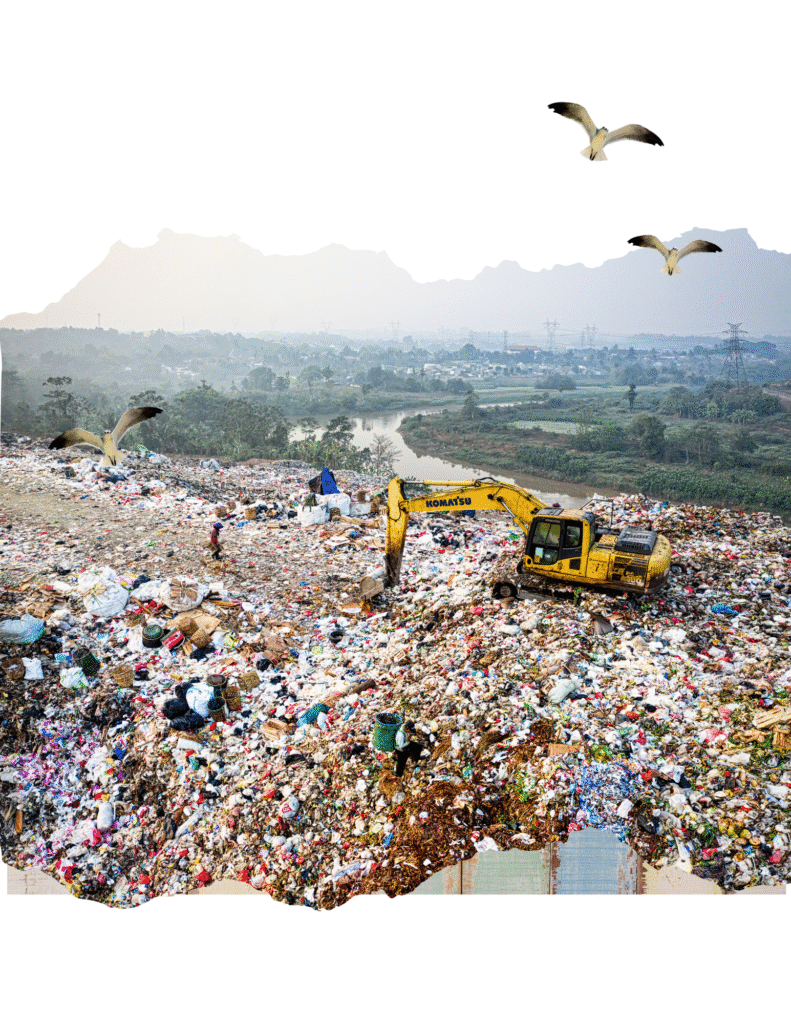
01 — Plastic Pollutes Our Earth
Plastic bottles are not biodegradable.
In North America alone, tens of billions of plastic water bottles are used each year — many of which end up in landfills or as litter.
Over time, plastic breaks down into microplastics — tiny fragments that persist in soil, waterways, and oceans for hundreds of years.
Fish consume microplastics.
We consume fish.
The cycle continues.
02 — Plastic Impacts the Atmosphere
From fossil fuel extraction to manufacturing, transportation, and incineration, plastic production contributes significantly to greenhouse gas emissions.
Plastic carries a heavy carbon footprint — from birth to afterlife.
03 — Plastic Threatens Global Waters
Massive garbage patches continue to accumulate in ocean gyres worldwide.
Plastic pollution affects hundreds of marine species through ingestion and entanglement.
It disrupts ecosystems.
It harms marine life.
It takes life.
As we consciously act on how, why, and when to use water,
we become part of the solution and not the problem.
04 — Plastic Harms Wildlife
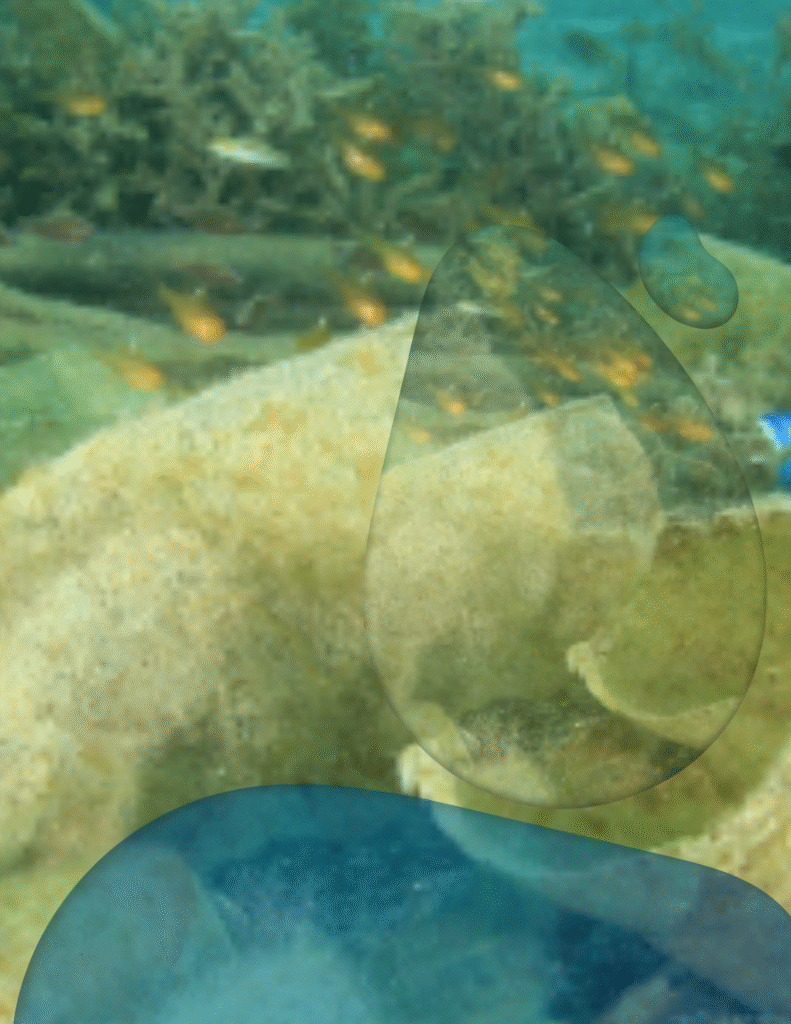
Research cited by environmental organizations indicates that hundreds of marine species — likely approaching 800 — are affected by plastic pollution.
Sea turtles mistake plastic bags for jellyfish.
Seabirds ingest bottle caps.
Marine mammals become entangled.
Our convenience becomes their crisis.
05 — Plastic May Affect Our Health
What’s actually in your bottled water?
- Was it exposed to heat during storage or transportation?
- Has the plastic begun to break down?
- Are microplastics present?
Research continues to examine the long-term health implications of microplastic ingestion in humans. What we do know is that heat can accelerate the leaching of certain compounds from plastic into water.
Filtered tap water stored in reusable glass or stainless steel is often a healthier, more sustainable option.
Is it truly sustainable to ship water across continents in plastic — when many of us have access to clean water at home?
If you haven’t watched The Story of Bottled Water, by The Story of Stuff, I encourage you to do so. It explains the ugly truth about bottled water and its negative impact on our earth.
The State of Our Water in 2026
As of 2026:
- Over 2 billion people still lack safely managed drinking water.
- In 2026, “water crisis” shifted to “water bankruptcy” and is the #1 global risk, based on its impact on society.
- Global freshwater use now exceeds 4 trillion cubic meters annually.
- By 2050, the environmental impact of plastic pollution could mean more plastic than fish.
- Nearly 1 in 4 people, or approximately 2.1 billion, lack access to safe drinking water.
- The global population has reached approximately 8+billion and is projected to approach 9.7 billion by 2050.
As the population grows, water vulnerability intensifies. Access to safe drinking water for many is becoming a privilege rather than a given. Many of us are blessed with reliable access to safe, clean drinking water. With that blessing comes responsibility.
Water Consciousness Begins With Us
It’s easy to feel small in the face of global statistics. But water consciousness is deeply personal. It begins with us.
In our homes.
In our bathrooms – at the sink, in the shower, in the bath.
In our kitchens.
In the bottle we carry.
At the garden hose, etc.
In the conversations we start.
Small actions, multiplied across communities, create a measurable change. When we consciously consider when, why, and how we use water, we shift from passive consumers to active stewards.
We become part of the solution — not the problem.
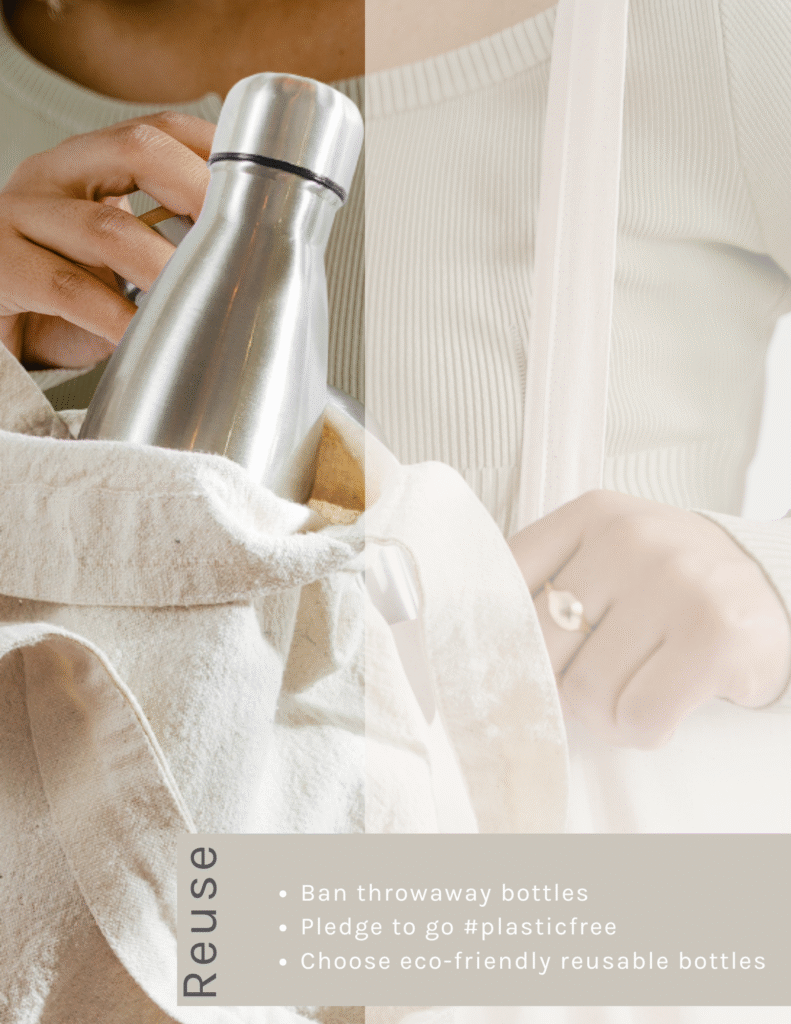
Don’t Throw Away – Reuse
Not all water bottles are created equal.
Single-use plastic bottles remain a global environmental burden — impacting our ecosystems, wildlife, the atmosphere, and potentially our health.
Choosing reusable alternatives is a simple yet powerful act of stewardship.
Conscious Living = Conscious Water
Water consciousness extends beyond bottles.
It includes:
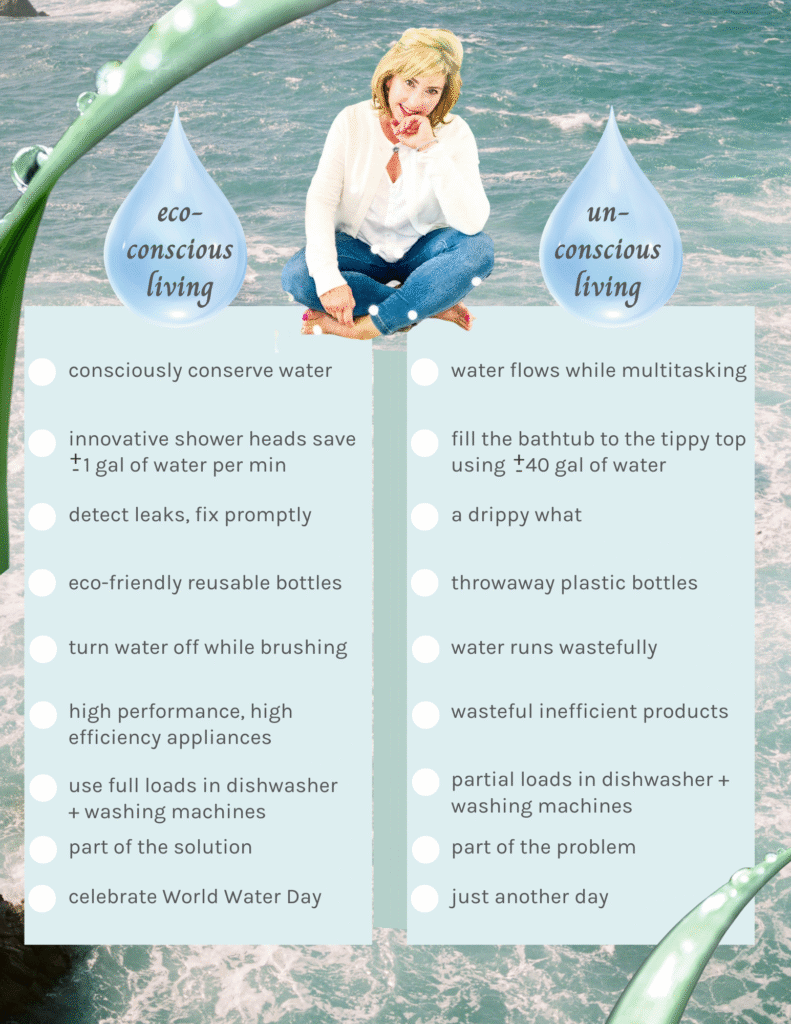
And perhaps most importantly: Appreciating the water within our own bodies.
The Inner Connection
As I wrote in Eco-Conscious Home, improving the water within our bodies is intimately connected to improving the water that covers our planet.
When we love and respect the water inside ourselves, we begin to protect the water outside ourselves.
Water is memory. Water is energy. Water is life.
A 2026 Reflection
World Water Day isn’t just a reminder of scarcity. It’s a reminder of stewardship.
Water consciousness is not about perfection. It is about awareness. Intention. Responsibility.
May we choose wisely. May we conserve consciously. May we protect what sustains us.
One room. One home. One community at a time.
With love & gratitude,
Charisse
ABOUT CHARISSE MAREI
I’m Charisse Marei — founder of Healthy Living by Charisse Marei and a lifelong advocate for conscious, healthy living. Since the 1980s, I have worked as a professional Eco-Conscious Interior Designer, certified Building Biology Environmental Consultant (BBEC), Feng Shui consultant, author, coach, and wellness educator — guiding others in creating environments that truly support well-being.
Water consciousness has long been woven into my work.
As both a design professional and a steward of healthy living, I understand that water is not only a global resource — it is a living presence in our homes and bodies. The quality of the water we drink, bathe in, cook with, and surround ourselves with directly influences our vitality, clarity, and long-term health.
My approach bridges environmental science, energetic awareness, and intentional design. I help creatives and women entrepreneurs transform their homes and workspaces into healthy, water-conscious sanctuaries — spaces that conserve wisely, nourish deeply, and reflect a commitment to stewardship.
Through one-on-one virtual consulting and my interactive books, I offer thoughtful, practical guidance to help you create a home that supports both personal wellness and planetary responsibility.
If you feel called to begin, you are invited to schedule a complimentary 15-minute clarity consultation to explore how to design your own healthy home haven —
One Room at a Time.
With love,
Charisse